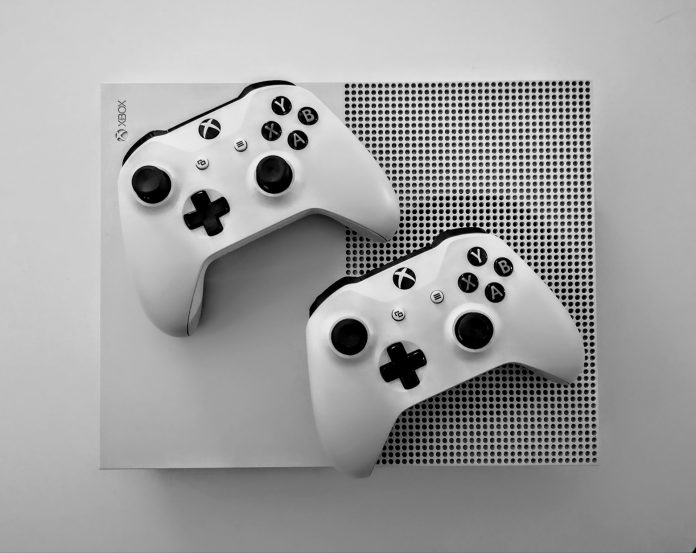
eSports, sports tournaments using video and games, are a proven way to teach soft skills. Now, entire school systems are jumping on the esports train to help students build these skills and improve career readiness.
Five specific skills that esports help to cultivate and improve are:
- Teamwork
- Strategic thinking
- Communication
- Self-confidence
- Problem-solving
In this post, we’ll take a look at how esports helps with each of these.
1. eSports and Teamwork Skills
An esports club in a school is a group of students who train and play together. That’s where they socialize and improve their teamwork skills to use in school, district, or even county tournaments.
Contrary to the stereotypical perception of gamers, students playing esports rely heavily on their teamwork skills to win. During games, they need to communicate effectively with their teammates and often work as one.
In fact, recent studies showed that people who play a collaborative video game were 20 percent more productive in face-to-face collaboration compared to those using traditional team-building activities.
By using esports activities in school, educators can teach valuable collaboration skills to students. Team tournaments will be an excellent way to showcase them on a higher level.
2. eSports and Strategic Thinking
Being a strategic thinker means taking a comprehensive, long-range problem-solving strategy and decision-making that includes thorough planning and objective analysis. Objective thinkers are some of the best leaders in the workplace.
eSports can help to develop this skill with the so-called “strategy” games like League of Legends. Teams have to plan their resources and strategies ahead to defeat their opponents, which involves brainstorming.
Just like traditional sports, esports requires setting goals, evaluating the competition, and thinking about specific ways to win over them. That’s a great way to learn strategic thinking.
“eSports require students to make a quick analysis, respond to ever-changing conditions and adjust their planning,” says Dorian Martin, an education writer at TrustMyPaper. “It’s a skill that’ll serve them well in the workplace by helping to make better decisions as team members.”
3. eSports and Communication Skills
Communication skills are an absolute must for a successful career. In fact, 69 percent of recruiters are looking for candidates with effective communication skills – but finding them is “very difficult” because “colleges and universities have not prepared students for jobs.”
eSports can help with improving skills in a unique way. In traditional sports, athletes quickly learn the importance of communication to winning games – a lack of communication means no quick reactions and adjustments.
The same applies to esports. A team should communicate to make adjustments and decide on actions – just as quickly as in football or basketball. That’s why every team member communicates with others via online text or voice all the time during the game.
With quick reactions often required, esports team members also learn clear written communication. Helping to develop this skill will be useful to write college essays, research papers, and reports – resulting in better academic performance.
Together with verbal communication, clear written communication makes up two essential esports skills for a successful career.
4. eSports and Self-Confidence
By having students work through hurdles to achieve specific goals, esports can help boost self-confidence and learn the importance of persistence.
In this Digital Schoolhouse study, for example, 80 percent of participants said they were likely to participate in other team sports after trying competitive gaming. So, their confidence in their skills to compete increased, along with the desire to learn other skills that help with that.
Educators need to motivate students and help them embrace their positive traits and strengths that help them compete.
A good idea is to focus on three basic needs:
- Competence – Give your students praise and recognition to make them feel more confident in their skills
- Relatedness – eSports meets this need by connecting a student to others and making them work together
- Autonomy – Educators should allow esports teams to play and interfere only when absolutely necessary.
Consider launching a weekly esports email newsletter to share news and provide recognition. Outsource writing to tools like Supreme Dissertations and TopEsayWriting – they’ll create email motivational texts you can customize and save yourself tons of time.
So, if you satisfy these three needs, your students will feel empowered to achieve their goals in life, too. As a result, you can give their self-image and self-confidence a major boost.
5. eSports and Problem-Solving Skills
Playing video games helps develop problem-solving skills by allowing students to learn from their mistakes, try different things, and experience a variety of problems.
In this APA study, more playing time was associated with higher problem-solving skills and school grades the next year. Study authors said playing esports improved students’ mood and reduced anxiety, which helped to focus on solving problems.
Another reason is that students can try different solutions to solve a problem without any costs. Video games teach them that solutions aren’t always obvious, so some trial-and-error is needed to find them.
Video games that promote problem-solving skills:
- Minecraft (under 10 y.o.) – Minecraft Education edition is also available along with lessons plans and other class resources
- Super Mario Odyssey (under 10 y.o.)
- Portal 2 (10 y.o. and over) – Physics and math classes based on this game are available for free, too
- Legend of Zelda: Breath of the Wild (10 y.o. and over)
- StarCraft (16 y.o. and over).
Consider these games for your students to teach them problem-solving skills. Many are free, multiplayer games, so some of your students might already be familiar with them.
eSports and Soft Skills: Summary
eSports is a proven strategy for improving the soft skills of students of many ages. It has created a brand-new area of performance and exploration where they can cultivate and improve teamwork, problem-solving, communication, strategic thinking, and even boost self-esteem.