
The concept of a “metaverse” is not as new as it may seem – at least not for science fiction writers. The idea of a digital universe where humans can live has shown up in popular movies (like The Matrix and The 13th Floor) and TV shows (like Stargate, Star Trek, and others), not to mention the books and short stories that are, sometimes, even older. The roots of a real-life (sic!) metaverse stretch back to the time of MUDs (online roleplaying games similar to Dungeons and Dragons) that first emerged in the 1970s. There was even one called “The Metaverse”, released in 1993 – it was a text-based virtual reality system, nothing like we are expecting to see in the near future.
A metaverse – no matter which company will be the first to launch one – will be a fully immersive digital environment, a world within our world where our avatars can walk around, play games and interact with each other, browse the web or check out the odds at Superbet if we so wish. And for this, it will need hardware on several levels.
VR (and/or AR) headgear
No matter if we are looking at full immersion or just a digital layer between the real world and our eyes, the metaverse will need some type of headgear. The range of headsets to choose from is constantly growing: if at first, we could choose from Oculus (and that was about it), today there are several options available – most of them are aimed at gamers.

Oculus is still among the leading choices for those looking for a lightweight, standalone headset – and Meta’s (you know, the company formerly known as Facebook) metaverse will likely have native support for it. Meta’s upcoming headset (which, for now, only exists in a prototype form) will be even smaller and lighter and will add better cameras for a much better AR experience to the mix.
Handwear
If you walk around the metaverse, you will want to interact with the things and avatars you find there. Using a VR controller is pretty nice… but still unnatural for anything that’s not a stick, a sword or an axe. For full immersion, you’ll need to grab things – and for that, you need gloves with haptic technology.

Fortunately, haptic gloves are not science fiction – they have been around for quite some time. When it comes to their price tag, in turn, things are a bit hair-raising at this point: a high-quality pair of haptic gloves that can accurately track the movement of your fingers in VR can set you back quite a few thousand dollars or euros, depending on where you live.
Bodywear and treadmills
In the movie “Ready Player One”, Wade Watts put on a full-body haptic suit to beam himself into Oasis and turn into Parzival. As you might expect, this technology is also already available – for the right price, that is.
bHaptics’ TacSuit X16 comes with 16 haptic feedback points to turn your gaming into a more realistic one – you can feel the bullets hit you, for example. Its big brother, the TacSuit X40 is better and more expensive. Both of these products are great for gaming – but won’t measure up in a metaverse.
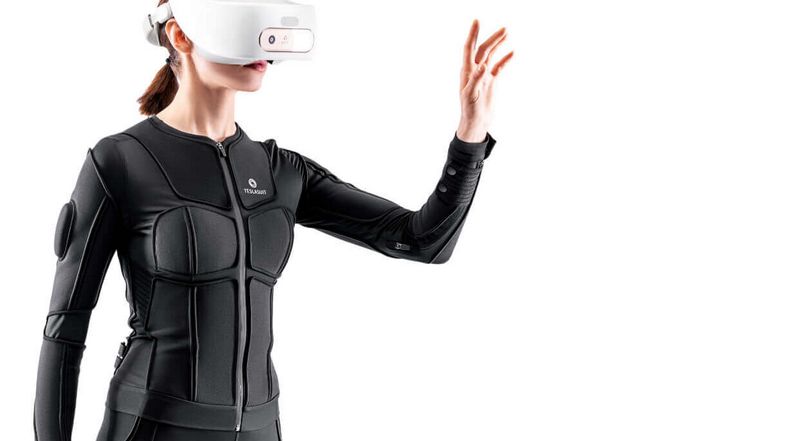
The Teslasuit is a much more serious device, covering the entire body, with sensors that collect biometric data and can even be used for motion capture, performance training, and – probably – gaming, too. If you can afford it, that is – this summer, one of the available Testlasuits was sold for 10 wrapped Ethereum – that’s around $46000 today.
Treadmills, in turn, which allows you to walk around in the metaverse, will likely be much more affordable. Virtuix’s Omni, the omnidirectional treadmill simulator that came to be after a successful Kickstarter campaign in the mid-2010s, is selling for around $2000 – the price of a decent gaming PC.
The metaverse is on our doorstep. For full immersion, in turn, we will probably have to wait for a while – until at least the price of hardware drops to an acceptable level.