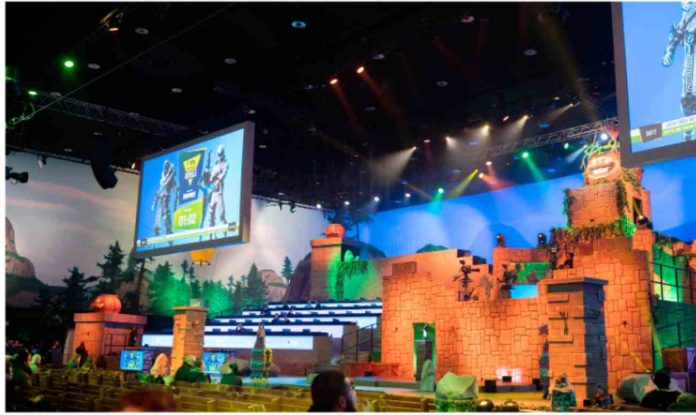
Imagine this: a buzzing arena, a rainbow of jerseys, faces painted in team colors, and a forest of banners waving in excitement. But hold your horses, this isn’t your grandfather’s baseball game. We’ve entered the electrifying universe of esports competitions.
In the digital world, esports masters, armed with nothing but their swift reactions and deep focus, vie for glory in celebrated digital universes like “League of Legends,” “Dota 2,” “Counter-Strike,” and “Overwatch.” These digital platforms, hosting prestigious events such as The International and the League of Legends World Championship, draw crowds comparable to those of traditional sports giants like the Super Bowl and World Series. Video Game betting becomes more and more respected by punters, and with convenient mobile software anyone can place a wager on the go. Go through a 1xBet iOS download the app guide at the link on the Ghanasoccernet website and check the esports line on your phone by yourself, since who needs a pigskin when you have pixels?
Rewind to the disco era of the 1970s, the golden age of arcade games. Who would have thought that those beeping, pixelated screens would morph into a global phenomenon? With the advent of the internet, video gaming leaped from living room pastime to a global competitive stage. Fast-forward to the present, and esports is not just a niche hobby but a booming industry, captivating over 400 million people worldwide. We’re talking professional leagues, hefty contracts, and sponsorship deals that’ll make your head spin. Projected to hit a staggering $1.87 billion by 2025, the esports sector is on track for exponential financial growth, marking a significant milestone in its economic journey.
So, how did mashing buttons evolve into a spectator sport? It’s a combination of killer games designed for competitive play, turbocharged internet speeds for seamless online battles, and a thriving community that turned gaming into a social phenomenon. And guess what? The traditional sports world is catching on. Sports franchises and celebrities are jumping on the esports bandwagon, bringing along their fanbase and deep pockets.
But it’s not all rainbows in the esports world. The industry grapples with issues like addiction, diversity challenges, and the sedentary lifestyle of gamers. Yet, proponents argue that esports offers benefits akin to traditional sports, such as team spirit, concentration, and mental agility.
Esports might not involve physical sprints or touchdowns, but the skills, strategy, and dedication of these cyber athletes are as real as it gets. Competing in digital realms, these esports athletes embody a competitive drive that’s deeply rooted in the real world.
Next, join us on a swift journey through history to grasp the meteoric rise of esports:
– 1980s: It all started with arcade classics like Space Invaders and Pac-Man. Picture the first video game tournament at Stanford in 1980, where the prize was a Rolling Stone magazine subscription. Groovy!
– 1997: The Red Annihilation tournament for Quake marks a turning point, attracting nearly 2,000 participants. The top prize? A Ferrari. Yes, you heard that right.
– 2000: Era marks a notable increase in online gaming popularity, paving the way for competitive platforms in games like Counter-Strike, Warcraft 3, and Starcraft.
– 2011: The Dota 2 International debuts with a groundbreaking $1.6 million prize pool, redefining esports tournaments.
– 2013: The introduction of the League of Legends Championship Series marks the advent of the first professional esports league.
– 2016: The League of Legends World Championship fills the Staples Center, with a peak viewership of 43 million.
– 2019: The Fortnite World Cup throws a whopping $30 million in the prize pot, with a staggering 454 million global viewers.
Esports’ skyrocketing popularity marks a seismic shift in competitive sports and entertainment. While traditional athletes might raise an eyebrow at gamers being called athletes, the new generation of fans is all in, cheering for these keyboard maestros like they’re the MVPs of a Super Bowl. The rise of esports is a testament to our digital age, proving that competition and stardom no longer need a physical field – just a virtual battleground and some serious gaming chops. Welcome to the era of cyber athletes, the new champions of the digital domain.